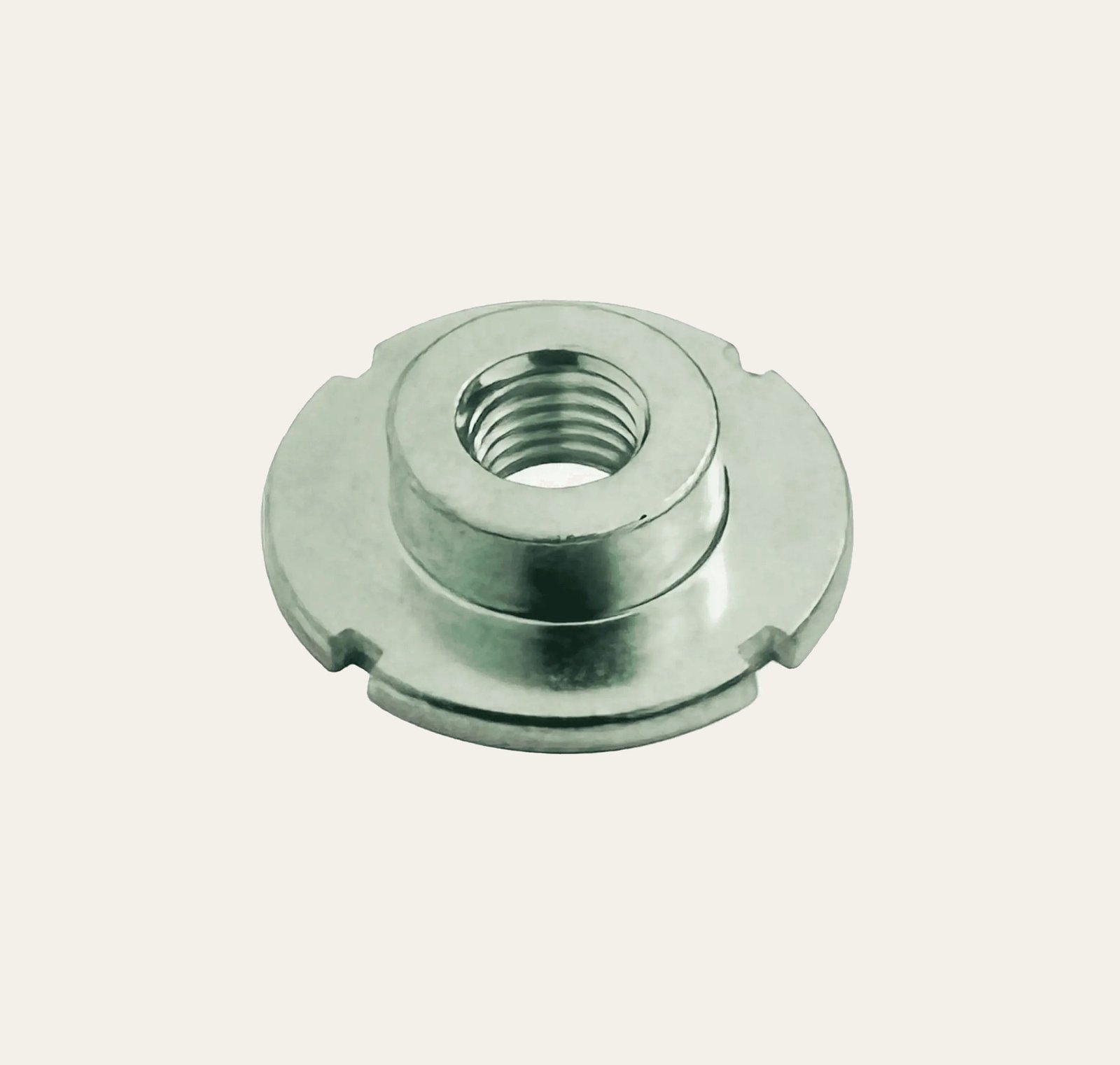
Round / ring-projection
Flanged and ring-projection forms, including geometries of the type used in some OEM specifications.

Automotive fasteners
Weld nuts, weld bushings and related weld elements are produced from the customer drawing for body-in-white and other automated welding applications. Projection style, location, thread condition and coating are taken from the print, not from a generic catalogue assumption.
This page describes a made-to-print capability, not a stock catalogue. Manufacture follows the customer’s current drawing revision, together with the stated material, finish and quality requirements. Unspecified points are flagged before production rather than assumed.
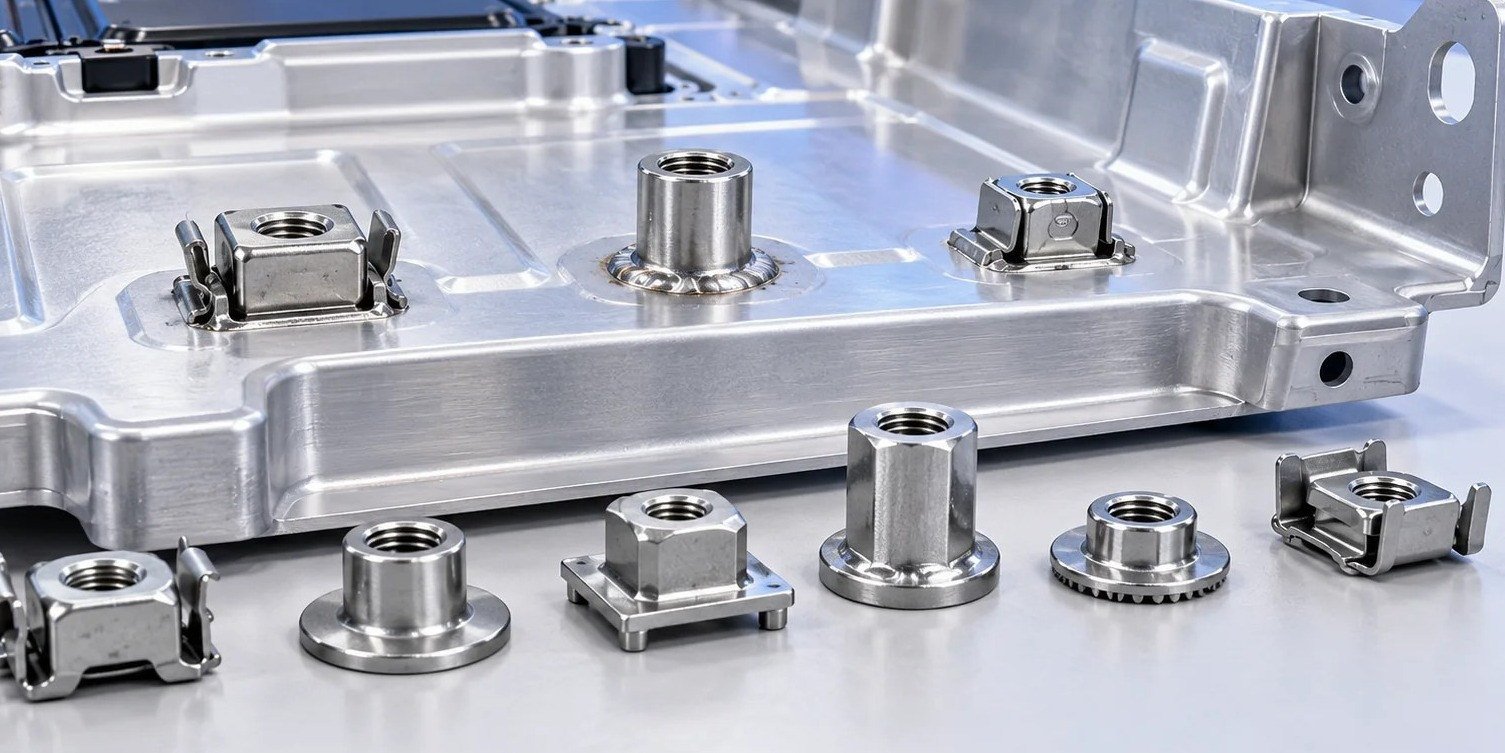
Flanged and ring-projection forms, including geometries of the type used in some OEM specifications.
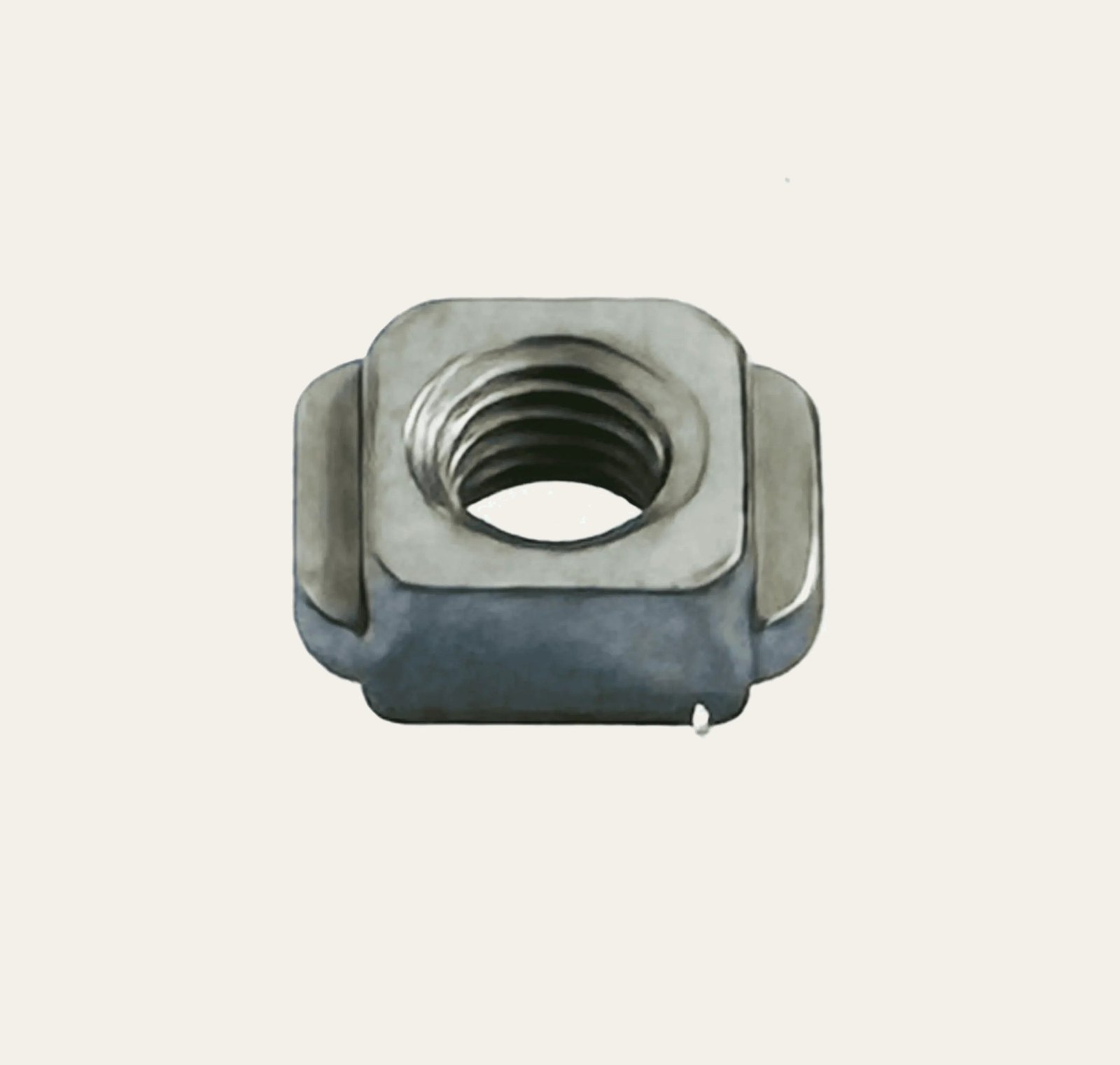
DIN 928 type square weld nuts, when that standard or an equivalent drawing is specified.
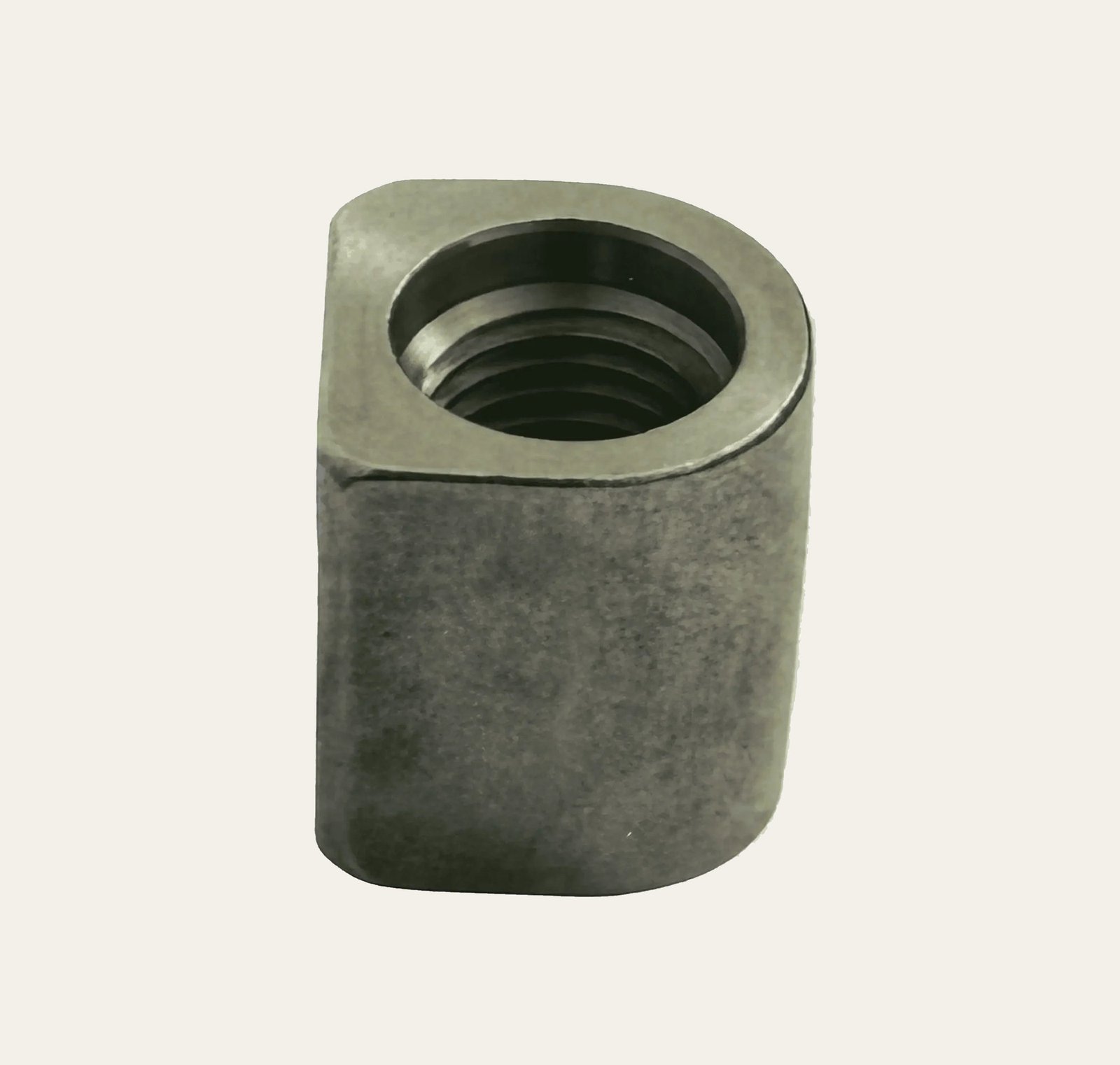
D-shape and off-centre-hole nuts, and compact weld bushings, as shown on the drawing.
The parts shown are capability examples, not stock items. Colour in a model does not represent the specified material or finish. Geometry, material, finish and inspection are taken from the customer’s current drawing. Catalogue type codes are SUNHY designations for these examples; they do not replace the customer’s item number or drawing revision.
Where the drawing requires it, features that affect automated feeding and robotic welding — orientation, pilot, chamfer and projection arrangement — are treated as part of the manufacturability review. Ring projections are typically specified where a more continuous joint is required; dimple projections are often used for general structural attachment. The arrangement used in production is the one on the drawing.
Example specification references such as GM 11518217 (projection weld nut), 11570174 and 25640395 (non-threaded weld nuts or locating standoffs), and 11611072 (fir-tree weld stud) describe geometry types that can be assessed from a customer print. They do not indicate that SUNHY is an approved GM supplier, or that these part numbers are in current production.
Cold heading is the usual starting point inside the M4–M24 window when the form can be produced that way. Secondary CNC is added for features that cannot be formed. If a first sample is machined and later lots are to be cold-headed, that change of route is identified and re-validated before serial release. Cold heading versus CNC.
Dimensional, thread and coating checks are set against the drawing and the order. PPAP and IMDS are reviewed when a project requires them and are confirmed in the quotation. They are not assumed as a standard inclusion on every order. Weld nuts and special nuts produced from the print.
The quotation will address manufacturability, the proposed route — cold heading, CNC, or a combination — sample timing, and the document package. What to include in a made-to-print RFQ.
Yes, when that standard or an equivalent drawing is specified. Manufacture still follows the customer’s current revision, including projection style, coating and the final thread condition.
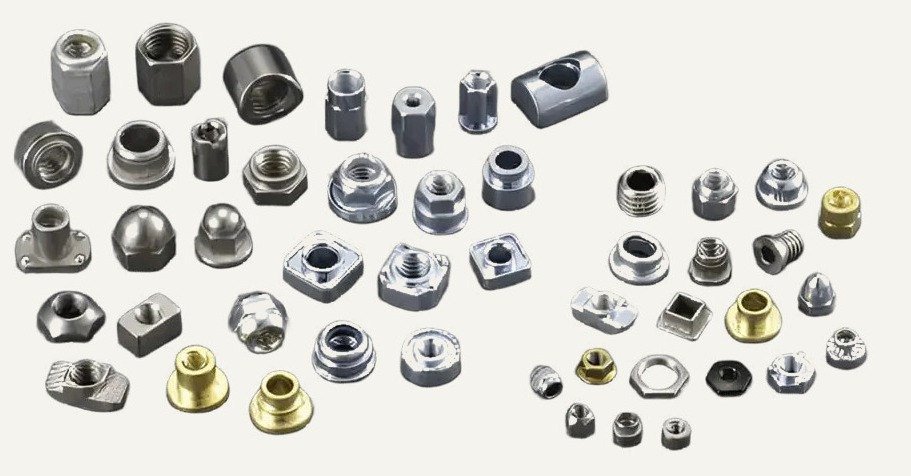
Lock nuts, clinch and rivet nuts, T-nuts and other non-catalogue nuts.
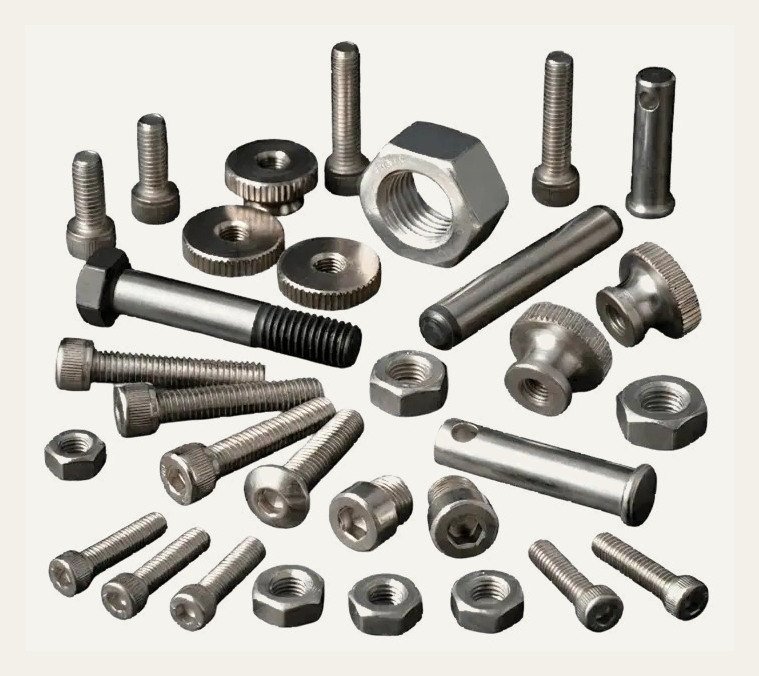
Application-specific heads, shanks and threads, including weld or fir-tree studs when drawn.
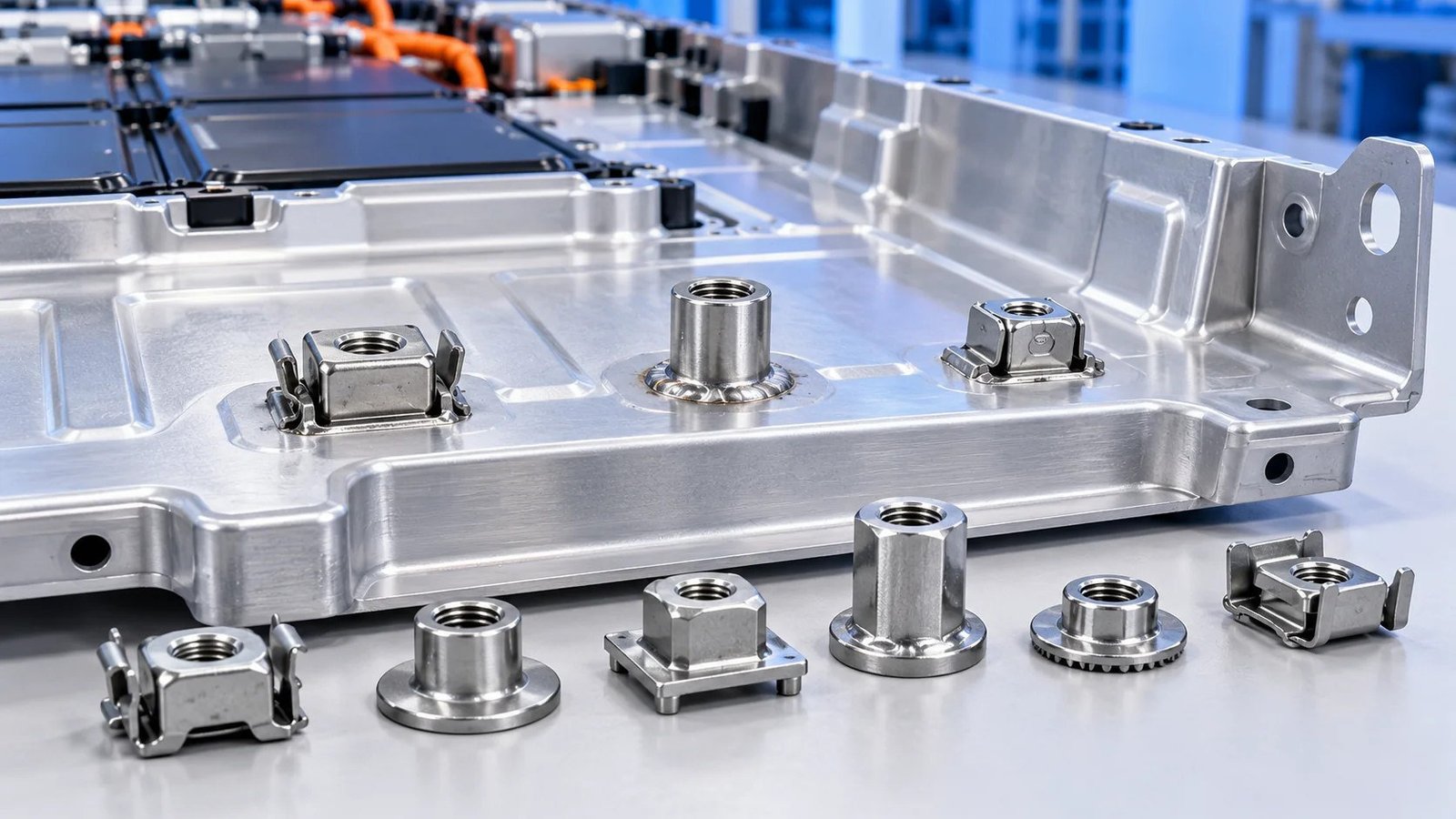
What a purchasing or supplier-quality engineer should put on the drawing and the RFQ.
Also see materials, inspection and documents — evidence is confirmed with the order, not assumed.
Include projection style, the final thread condition and how the part will be fed or welded, so the route can be set accordingly.