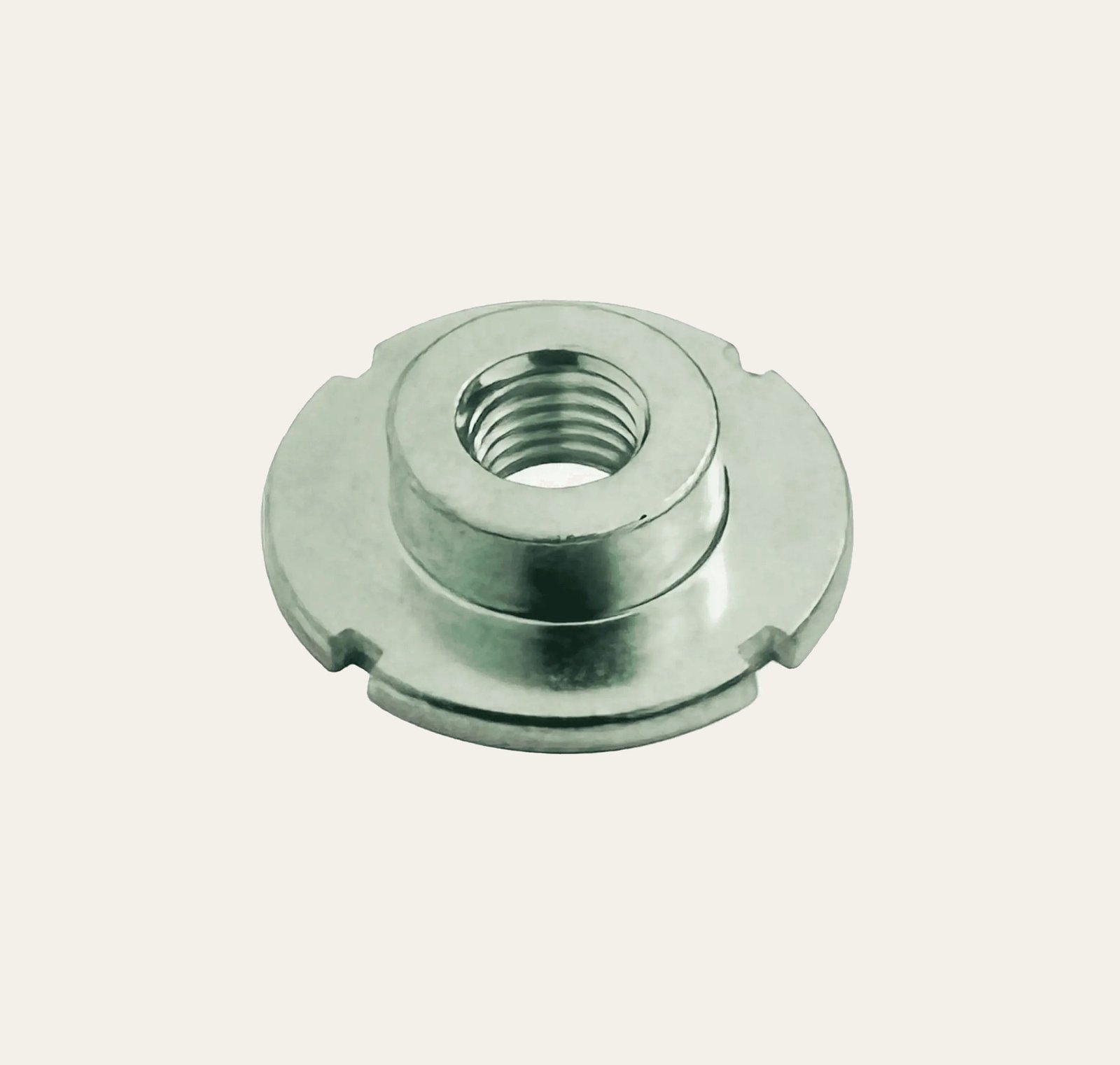
Round / ring-projection
Flanged and ring-projection forms, including geometries of the type used in some OEM specifications.

Capabilities
The families below are capability examples, not a stock list. Manufacture follows the customer drawing, together with the stated material, property class and quality requirements.
01
Weld nuts, weld bushings and related weld elements are produced from the customer drawing for body-in-white and other automated welding applications. Projection style, location, thread condition and coating are taken from the print, not from a generic catalogue assumption.
Where the drawing requires it, features that affect automated feeding and robotic welding — orientation, pilot, chamfer and projection arrangement — are treated as part of the manufacturability review.
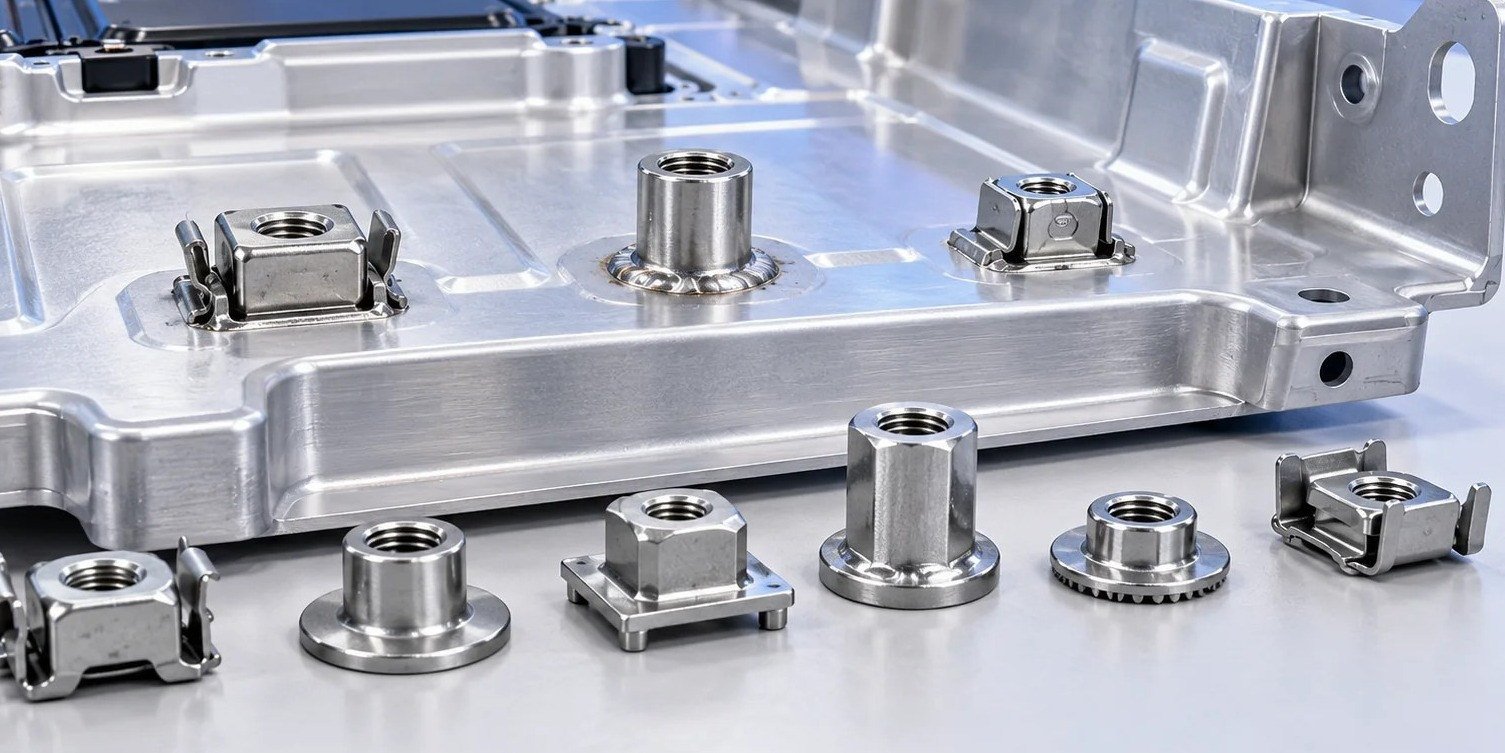
Flanged and ring-projection forms, including geometries of the type used in some OEM specifications.
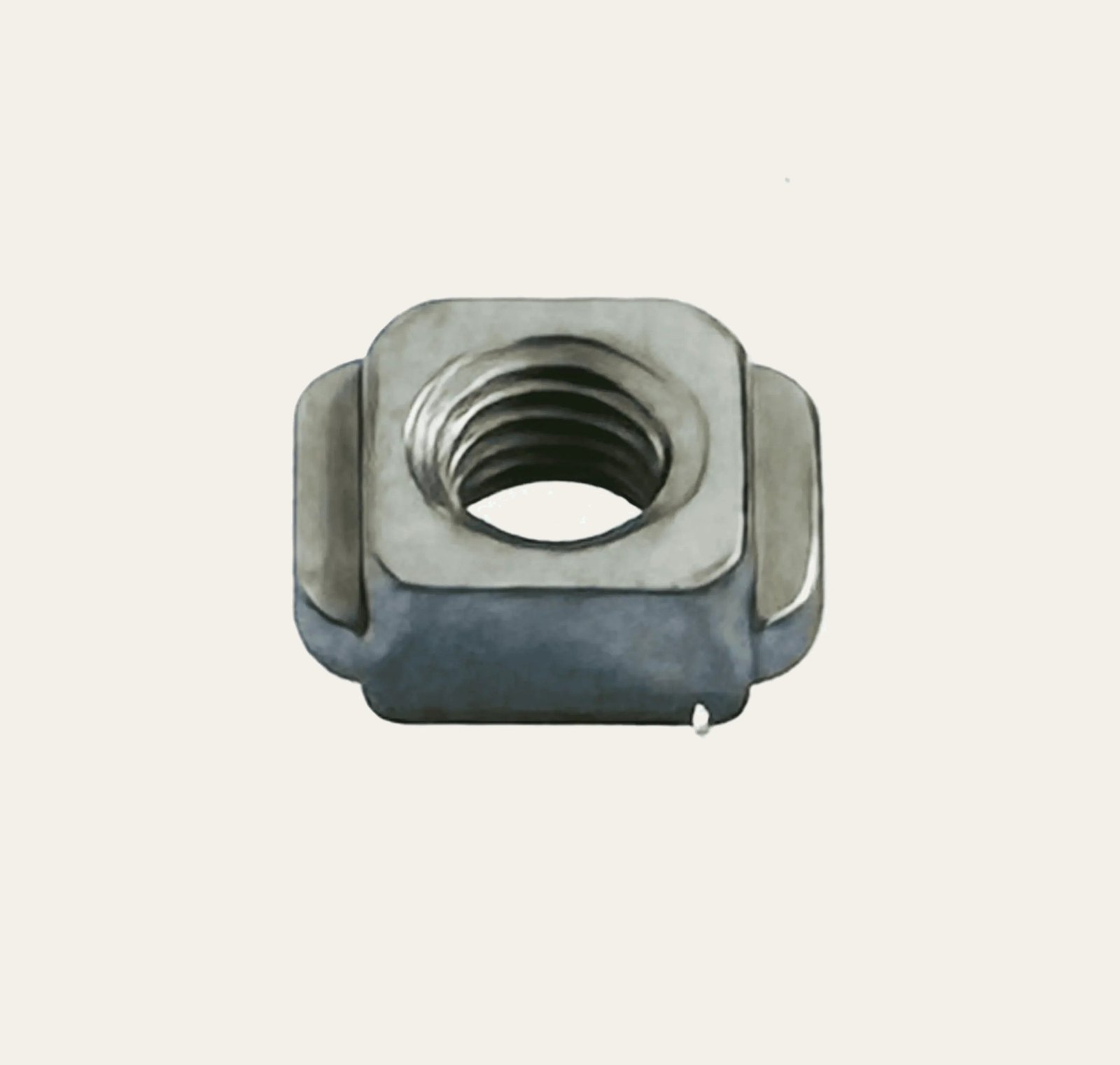
DIN 928 type square weld nuts, when that standard or an equivalent drawing is specified.
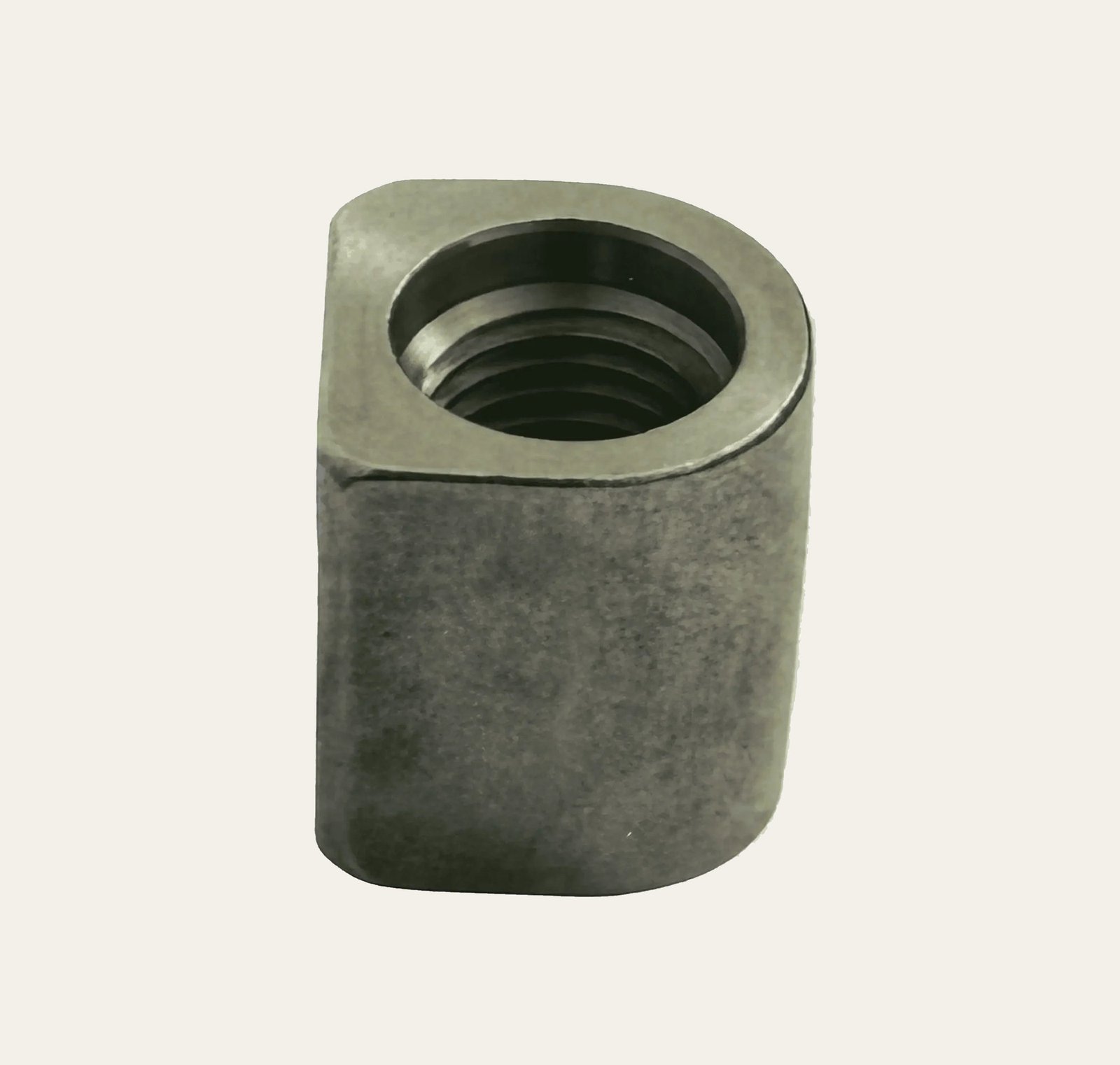
D-shape and off-centre-hole nuts, and compact weld bushings, as shown on the drawing.
Ring, three- or four-dimple, or elongated projections are selected as defined on the drawing. The final thread condition — including any gauging after welding or after coating — should be stated in the RFQ so that the process route can be set accordingly.
Example specification references such as GM 11518217 (projection weld nut), 11570174 and 25640395 (non-threaded weld nuts or locating standoffs), and 11611072 (fir-tree weld stud) describe geometry types that can be assessed from a customer print. They do not indicate that SUNHY is an approved GM supplier, or that these part numbers are in current production.
02
Non-catalogue nuts and related installation elements are produced when the drawing, material and quality requirements cannot be met by a standard hex nut. The route — cold heading, CNC, or both — is selected against the geometry and the intended volume.
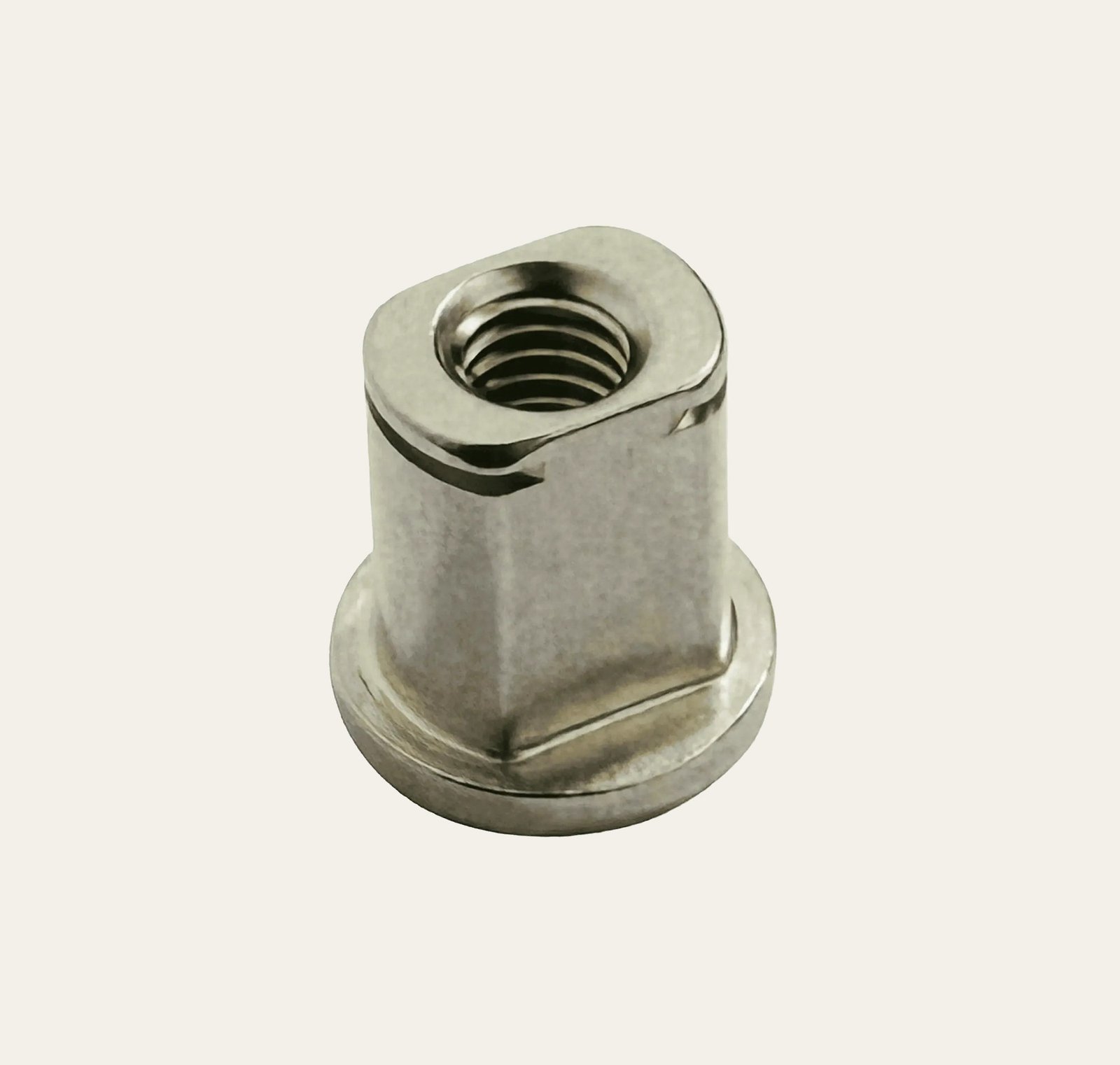
Slab-base T-nuts, pronged tee nuts and knurled inserts, as drawn.
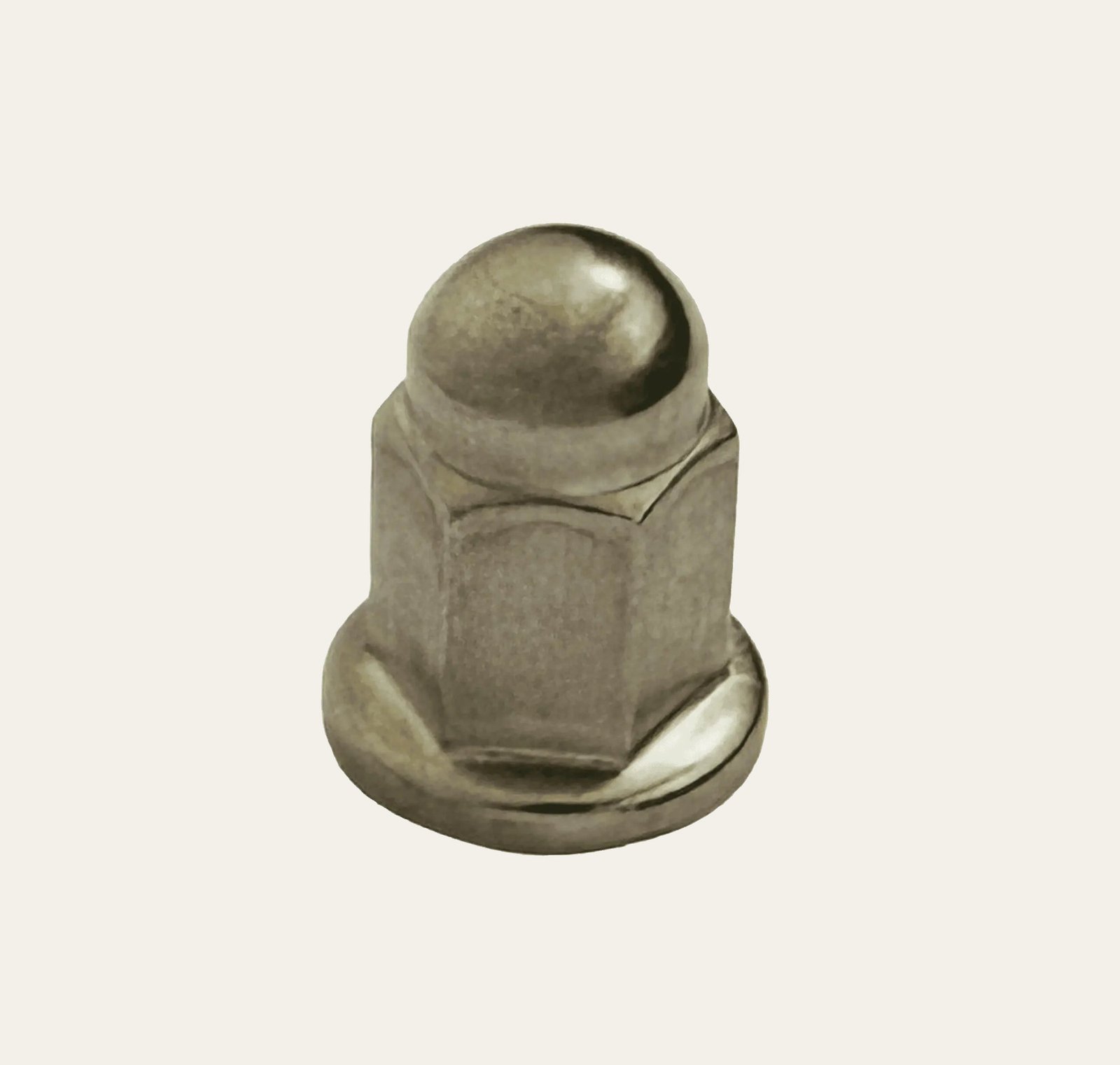
Acorn or cap nuts, and security forms including specified drives.
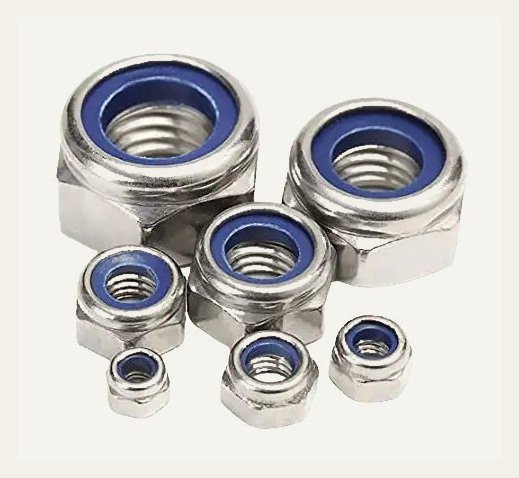
Nylon-insert and other prevailing-torque lock nuts, to the specified standard or print.
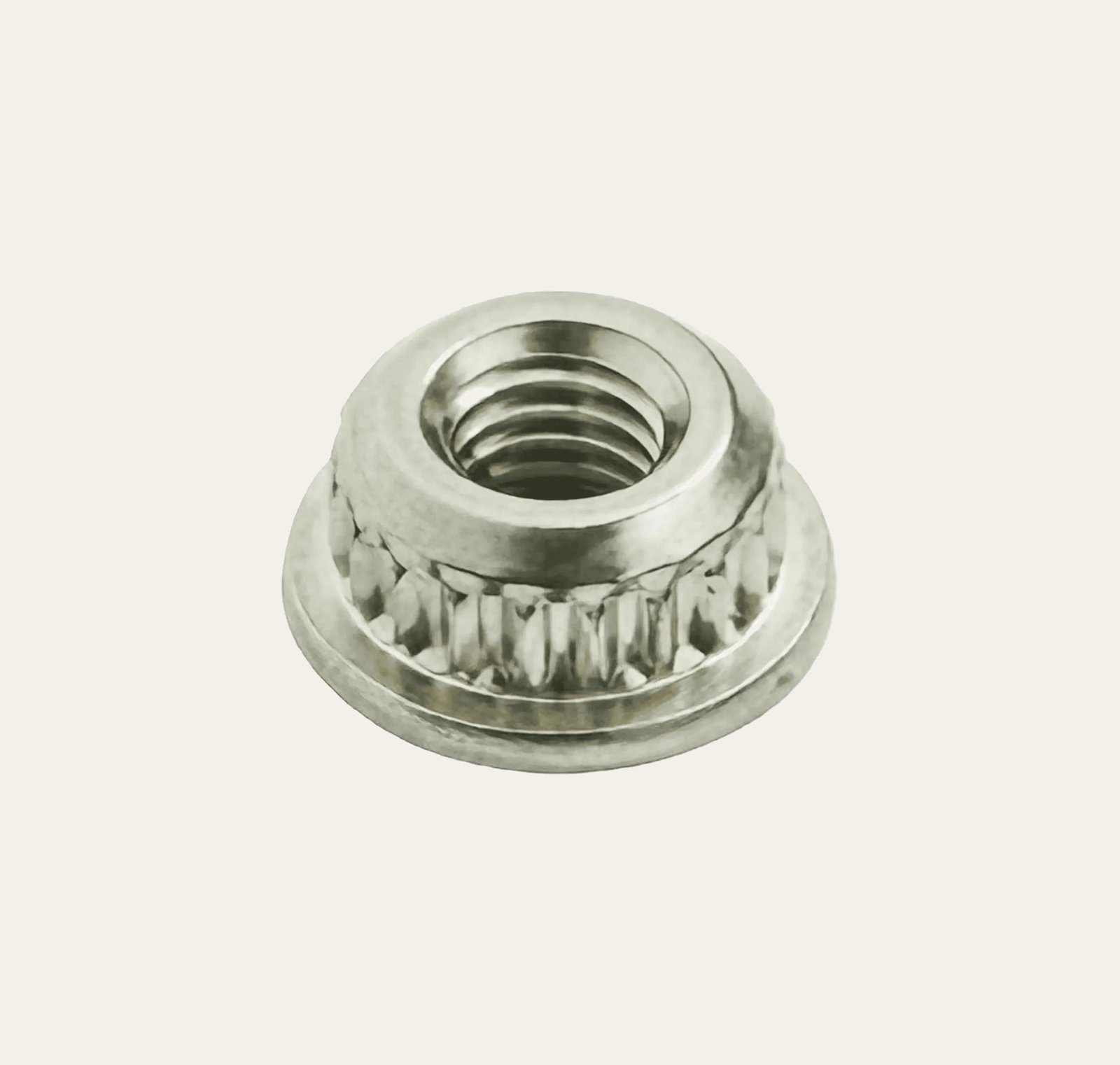
Self-clinching nuts and related sheet-installation elements.
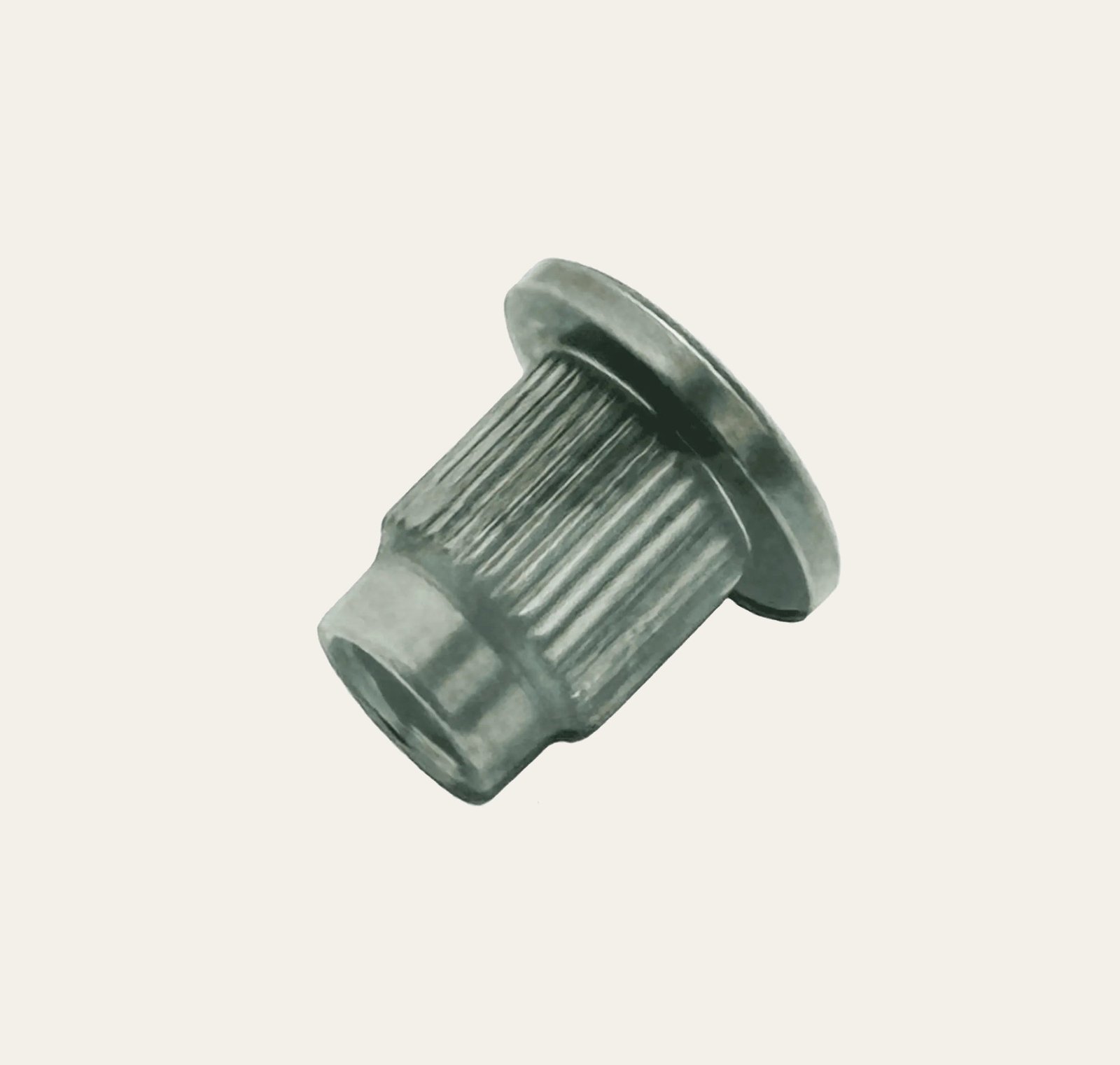
Rivet nuts and similar mechanically installed fasteners, to the drawing.
Typical minimum order quantities for special cold-forged or custom turned nuts are 10,000 to 50,000 pieces, depending on complexity and tooling. Prototypes can be machined for validation before production tooling is committed.
| Topic | What is reviewed | What to state in the RFQ |
|---|---|---|
| Installation method | Clinch, rivet, weld, thread engagement or a captive feature | Parent-material thickness, hole condition and assembly sequence |
| Prevailing torque | Insert, all-metal, or another specified locking feature | Torque window, temperature and reuse conditions, if known |
| Thread after finish | Gauging before or after coating, as required | Tolerance class and final go / no-go condition |
| Cosmetic or functional faces | Head, flange, knurl or visible surface | Any appearance standard or contact-face requirement |
03
Made-to-print bolts, screws, studs, washers, pins and other threaded or non-threaded parts are produced in metric or inch series, including special threads and fine pitch when those are specified.
This site does not present a standard hex-bolt stock list. The scope here is application-specific geometry, thread, coating or inspection.
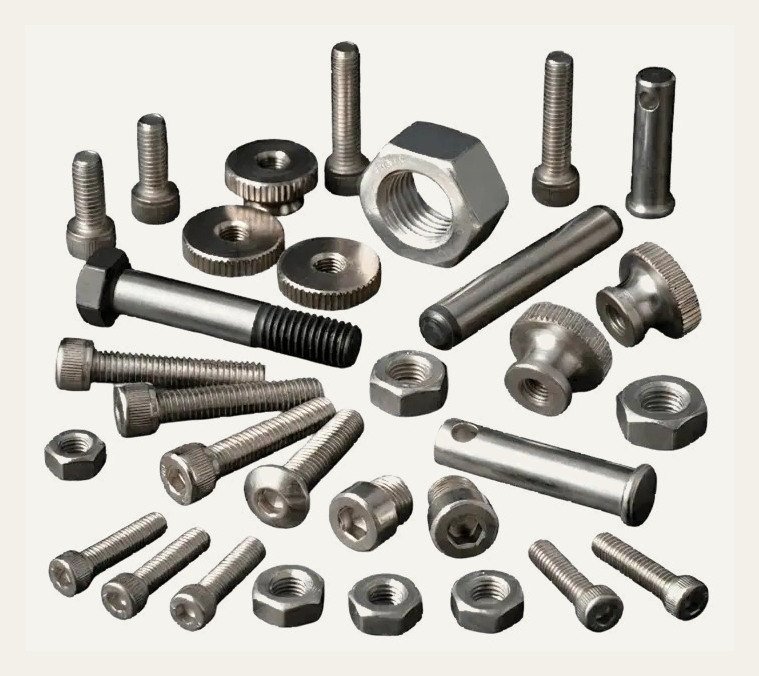
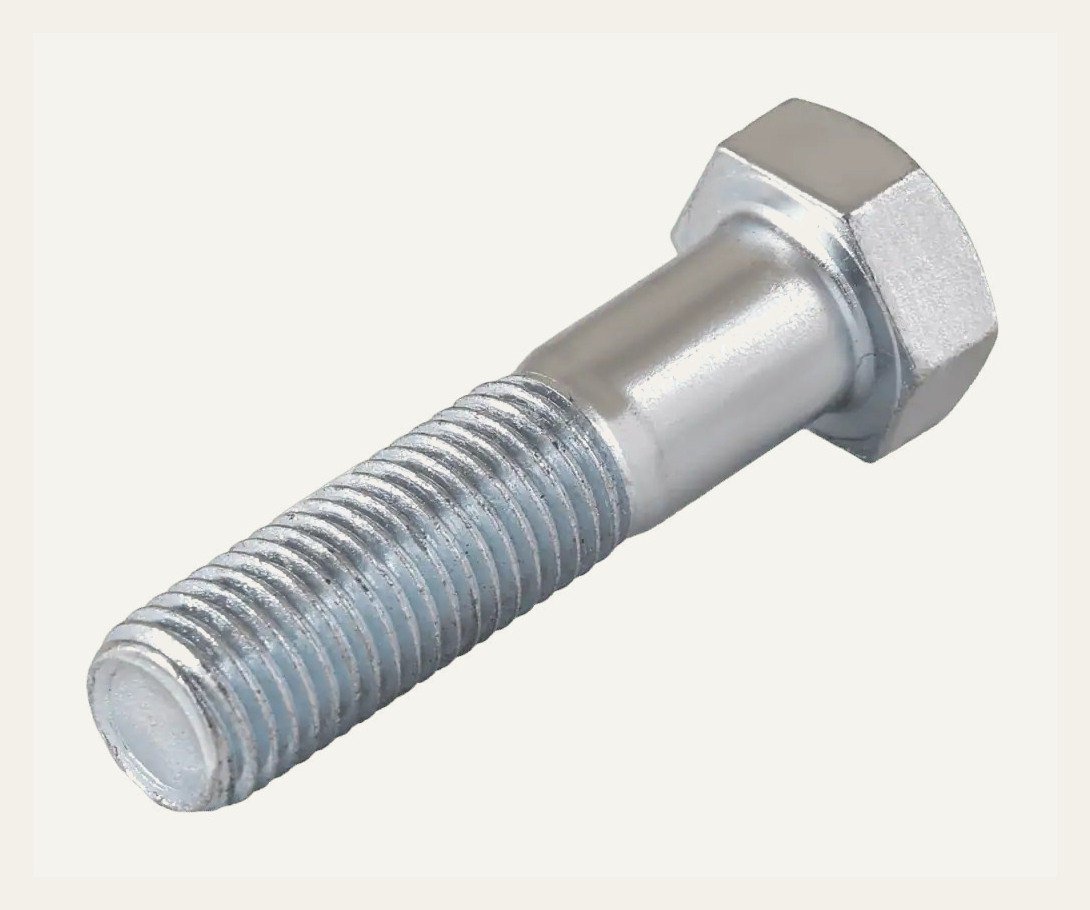
Hex and other head forms, including non-catalogue shank, under-head or drive features.
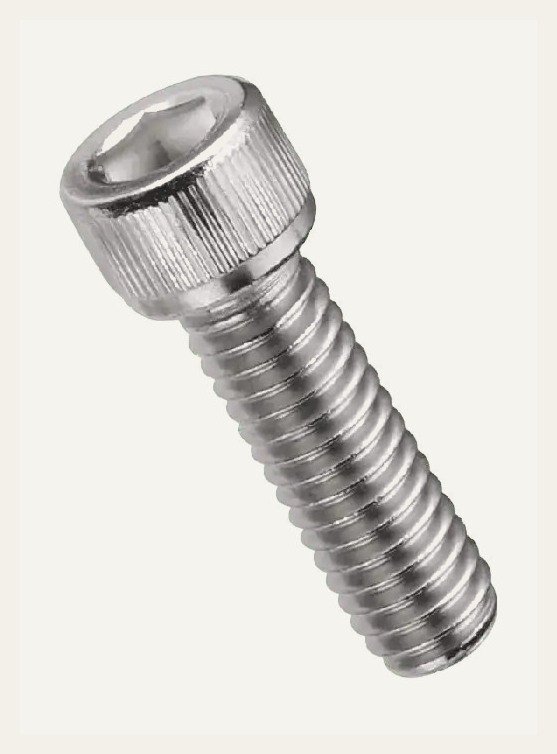
Socket-head and other special-head screws when the print requires them.
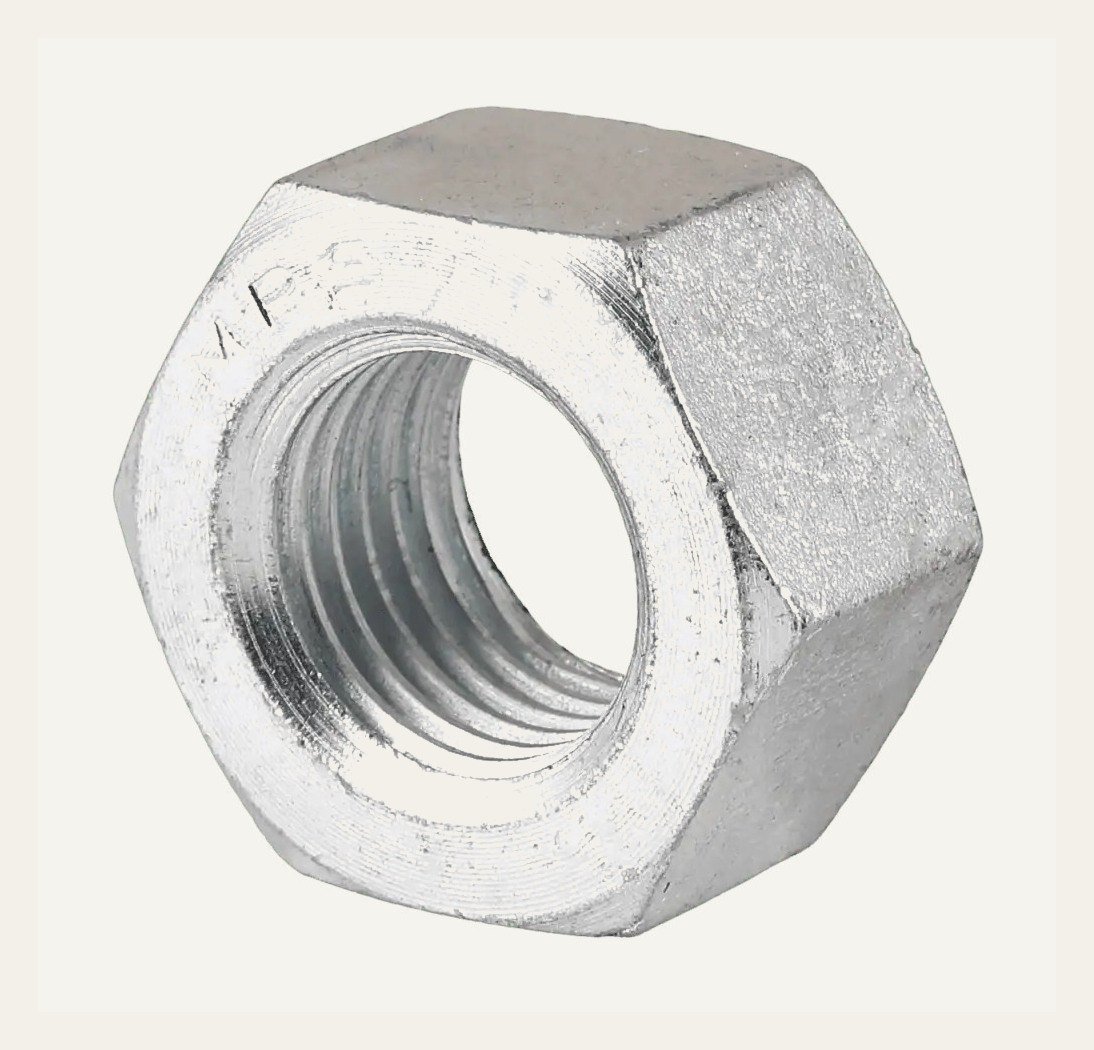
Nuts produced to the same programme, property class and finish as the mating part.
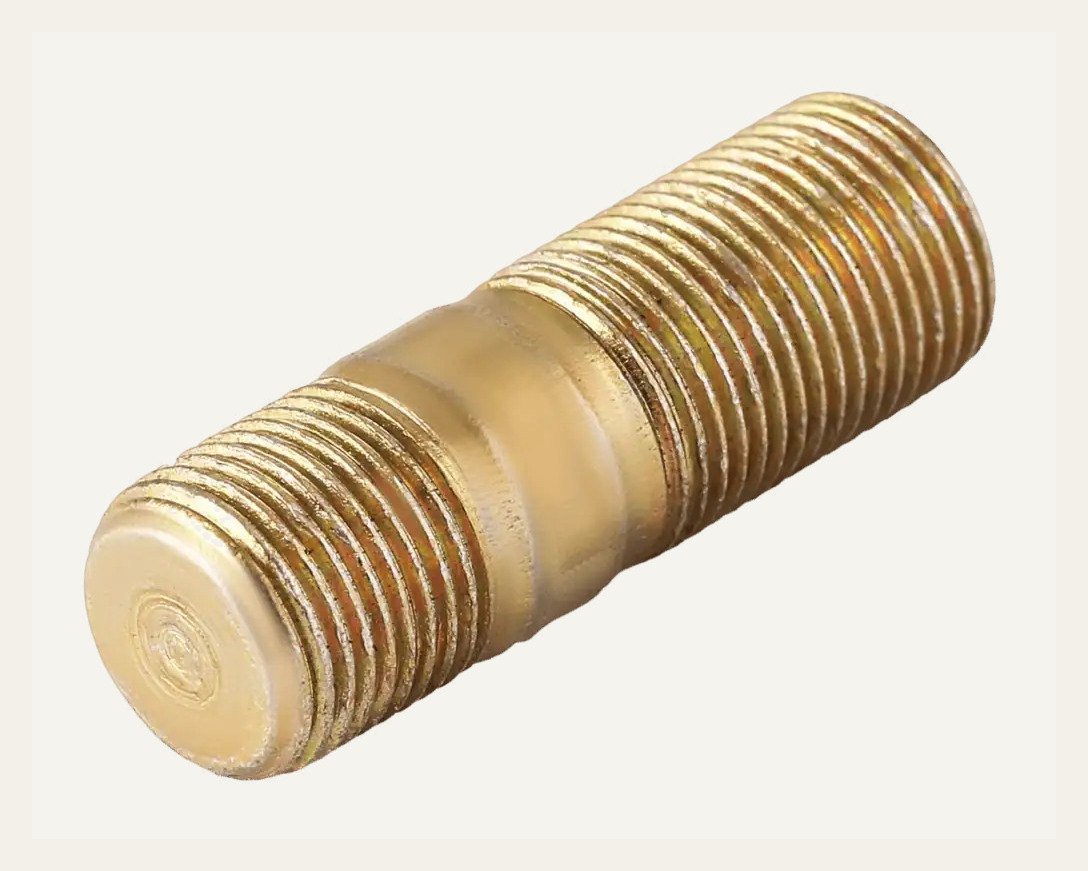
Double-end, weld or fir-tree studs and related forms, as shown on the drawing.
04
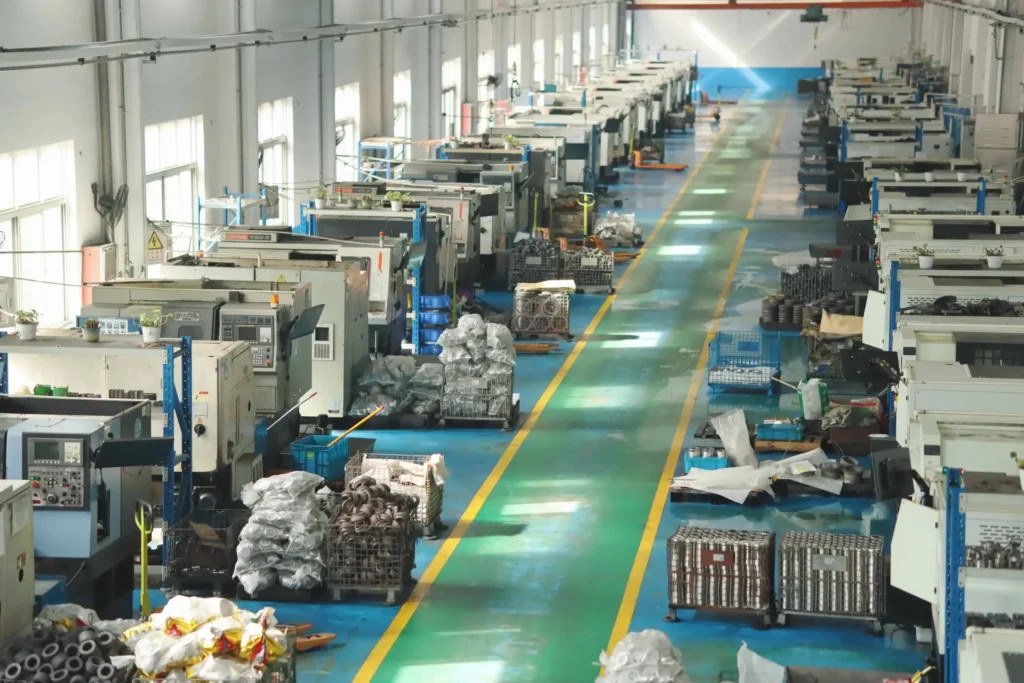
Bushings, spacers, collars and other rotationally symmetric parts can be produced by CNC turning, or by a combination of cold forming and secondary machining, when the drawing and volume support that split.
Concentricity, runout, bore, length and surface-finish limits are taken from the print and confirmed in the inspection plan. Pins and other non-threaded parts are reviewed in the same way.
Cold heading is treated as an M4–M24 window unless a combined or fully machined route is agreed for sizes or shapes outside that window. A wider coverage may be reviewed by enquiry.
Related work
Drawing-controlled fittings and valve components for gas regulating and filtration equipment — in brass, carbon steel and aluminium — are described on a separate page. Other drawing-controlled metal parts, beyond the fastener families shown, can also be reviewed when a print is provided.
The quotation will state the proposed route, the inspection and document package, and the commercial terms for that part.