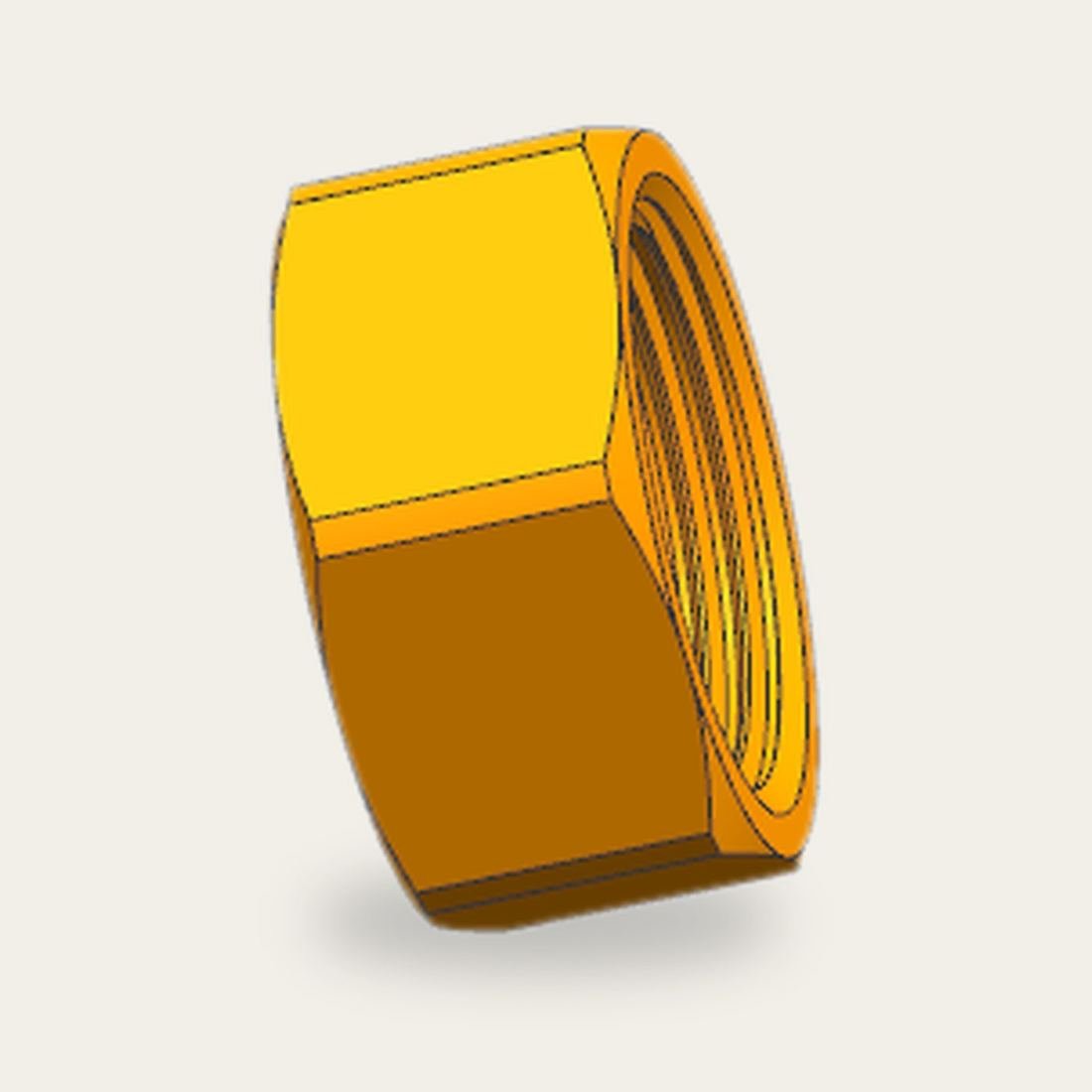
SH-BR-UN-034
Brass union nut
CuZn39Pb3 / CuZn40Pb2 · Natural finish · Thread G 3/4
Cast union nut for G 3/4 connections on equipment assemblies, produced to the agreed drawing.

Gas-equipment components · Brass
Union nuts are made to the print for use in equipment assemblies. The catalogue example is a cast union nut for G 3/4 connections. The route — CNC, cold heading, or a combination — is selected against the geometry and the intended volume.
This page describes a made-to-print capability, not a stock catalogue. Manufacture follows the customer’s current drawing revision, together with the stated material, finish and quality requirements. Unspecified points are flagged before production rather than assumed.
SH-BR-UN-034
CuZn39Pb3 / CuZn40Pb2 · Natural finish · Thread G 3/4
Cast union nut for G 3/4 connections on equipment assemblies, produced to the agreed drawing.
The parts shown are capability examples, not stock items. Colour in a model does not represent the specified material or finish. Geometry, material, finish and inspection are taken from the customer’s current drawing. Catalogue type codes are SUNHY designations for these examples; they do not replace the customer’s item number or drawing revision.
The example is a union nut for G 3/4 connections on equipment assemblies. Hex form, thread, sealing face and any chamfer or undercut follow the agreed drawing. The catalogue names this example as a cast union nut; that process description belongs to the example, not to every union nut that can be reviewed.
SUNHY supplies the nut as a component part. It does not supply a complete regulator, coupling assembly or station.
The route — CNC, cold heading, or a combination, and casting where that is the agreed process for the part — is selected against the geometry and the intended volume. Typical minimum quantities for custom turned or special cold-forged nuts are 10,000 to 50,000 pieces, depending on complexity and tooling. Sample timing is confirmed with the enquiry; 100-piece samples are typically available in 45 days.
Grade, temper, thread class and inspection are taken from the print. Alternative copper alloys are reviewed against the drawing, the process route and the required documents. EN 10204 3.1 and other evidence are confirmed with the order, not assumed.
The quotation will address manufacturability, the proposed route — cold heading, CNC, or a combination — sample timing, and the document package. What to include in a made-to-print RFQ.
No. The catalogue example SH-BR-UN-034 is described as a cast union nut. The process for a production part is agreed against the drawing, the geometry and the intended volume.
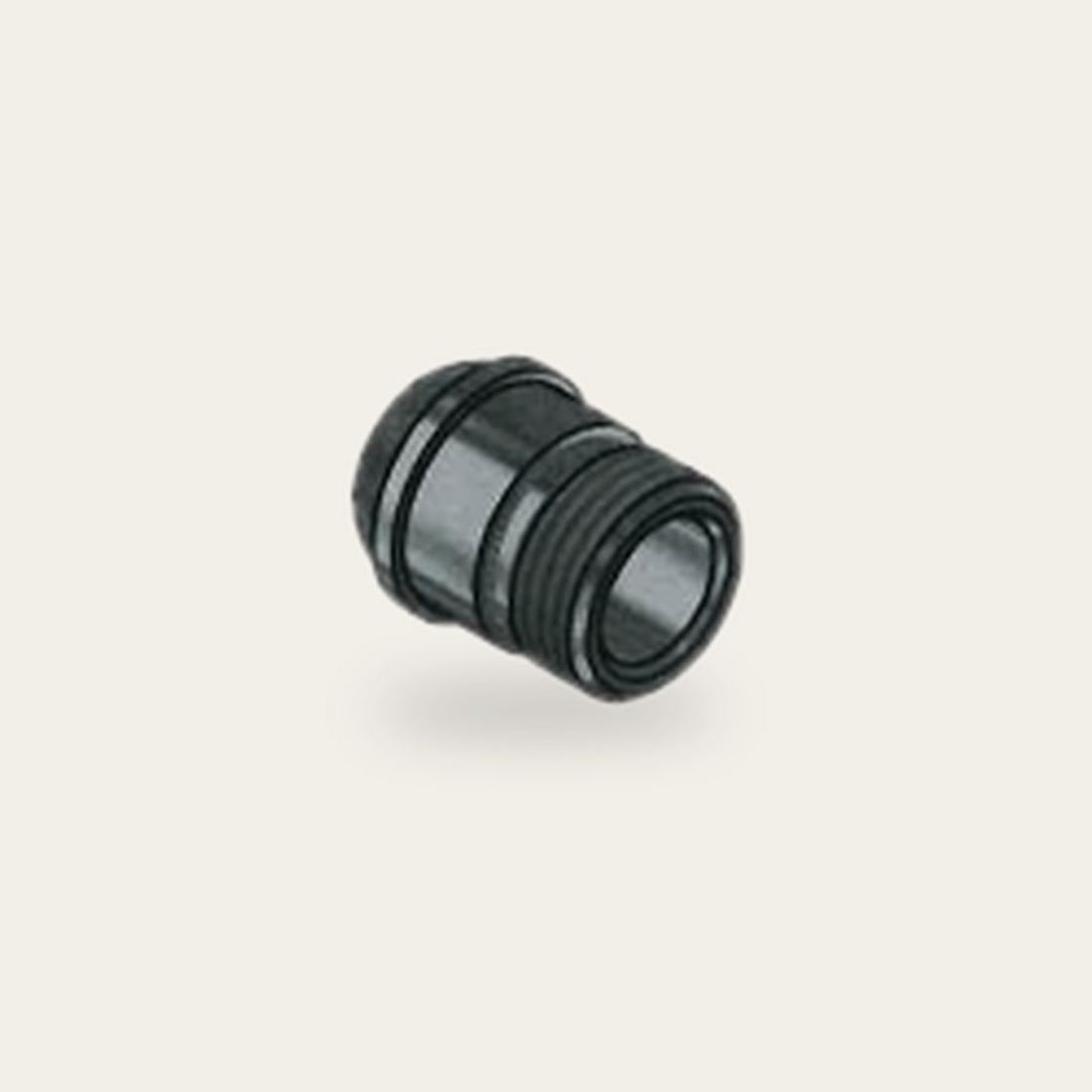
CW614N inlet stubs and connecting nipples, often used at the same interface as a union nut.
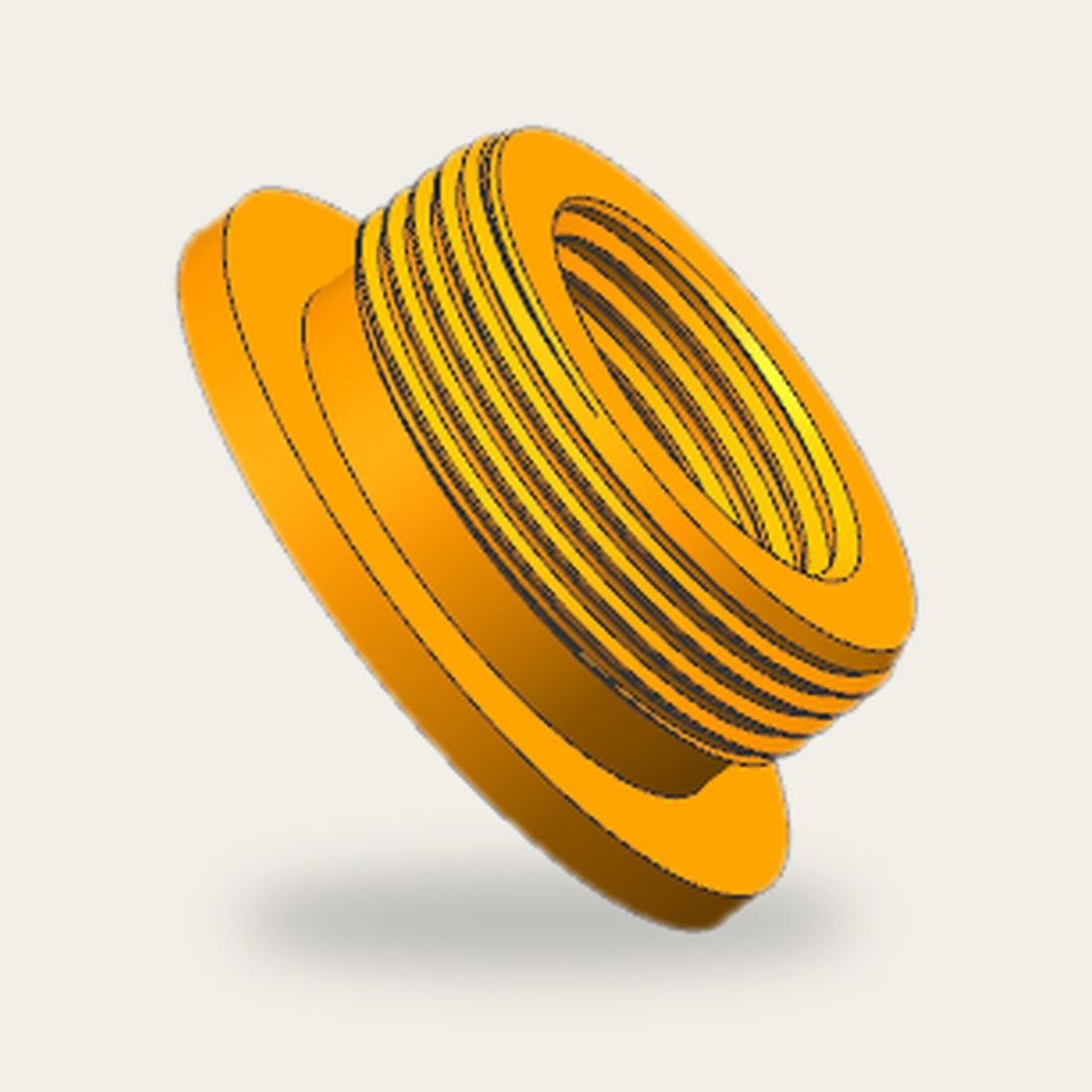
Intermediate threaded pieces for equipment assemblies, in S355J2, typically zinc plated.
A buyer’s note on specifying these accessories from the print.
Also see materials, inspection and documents — evidence is confirmed with the order, not assumed.
Include the current revision, the named copper-alloy grade and the thread and sealing condition.